Swipe cards get lost. Fingerprint scanners fail when hands are dirty. Manual registers are prone to errors and manipulation.
Businesses today need accuracy, speed, and fraud prevention in attendance tracking — and that’s where the face recognition attendance system changes the game.
Powered by AI, it uses advanced facial recognition to verify employee identity in seconds, making clock-ins secure, touch-free, and impossible to fake.
What is a Face Recognition Attendance System?
A face recognition attendance system is an AI-based tool that uses facial biometrics to record employee attendance.
Instead of scanning cards or entering PINs, employees simply look at a camera, and the system verifies their identity instantly.
Modern systems integrate with:
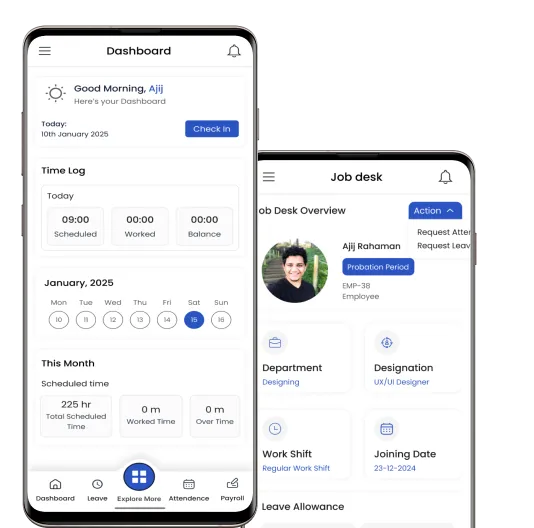
- Employee attendance management systems for shift planning
- Employee tracking apps for mobile check-ins
- AI productivity trackers for performance insights
How Face Recognition Attendance Works
1. Image Capture
When an employee faces the scanner or camera, the system captures an image.
2. AI Analysis
The AI maps unique facial features — distance between eyes, jawline shape, etc.
3. Instant Verification
Within seconds, the system matches the face to the stored employee profile and records the attendance.
4. Cloud Sync
Data is stored in a secure, cloud-based attendance management system.
Why Businesses Are Switching to Face Recognition Attendance
1. Fraud Prevention
Buddy punching and fake check-ins are eliminated.
2. Speed & Convenience
No physical contact, no swiping cards, no remembering PINs.
3. Touch-Free Safety
Ideal for hygiene-conscious workplaces post-pandemic.
4. Seamless Integration
Links with employee monitoring software and payroll tools for automation.
AI-Powered Benefits
1. Real-Time Attendance Tracking
Managers can view live attendance dashboards across multiple locations.
2. Automated Reports
Generate compliance-ready reports without manual work.
3. Integration with Productivity Tracking
Paired with an AI-powered productivity tracker, you can see not just who is present, but how effectively they work.
4. Remote & Hybrid Work Support
Employees can check in via a mobile camera through employee tracking applications.
Industries That Benefit Most
- Manufacturing – High-volume workforce, need for speed.
- Healthcare – Contactless safety measures.
- Retail – Multiple locations and shifts.
- Corporate Offices – Fraud-free time tracking.
- Remote Teams – Mobile face recognition check-ins.
How It Compares to Other Attendance Methods
| Method | Accuracy | Fraud Risk | Speed | Hygiene |
| Manual Log | Low | High | Slow | High contact |
| Swipe Card | Medium | Medium | Fast | Low contact |
| Fingerprint | High | Low | Medium | Medium contact |
| Face Recognition | High | Low | Fast | No contact |
Integration with Workforce Management Tools
A face recognition attendance system becomes more powerful when combined with:
- Employee Attendance Management System – For shift planning and leave management.
- Employee Tracking App – For GPS-based mobile check-ins.
- AI Productivity Tracker – For performance optimization.
Best Practices for Implementing Face Recognition Attendance
1. Ensure Proper Lighting
Good lighting ensures accurate recognition.
2. Regular System Updates
Keep AI models updated for accuracy improvements.
3. Employee Privacy Protection
Comply with data protection laws like GDPR.
4. Staff Training
Train employees on proper usage for maximum accuracy.
Future of Face Recognition Attendance
Soon, AI will combine face recognition with emotion detection, health monitoring, and predictive attendance analytics — helping businesses manage workforce efficiency proactively.
Conclusion: Upgrade to AI Attendance Today
A face recognition attendance system is the most accurate, secure, and convenient way to track employee attendance today.
When integrated with AI productivity tracking and employee attendance management systems, it transforms from a simple attendance tool into a full-scale workforce optimization solution.
If your business still uses outdated time-tracking methods, now is the time to make the switch.